
Measure Discovery, Not Just Traffic
A practical perspective on interpreting search visibility, audience behaviour and enquiries without confusing attribution with proof.
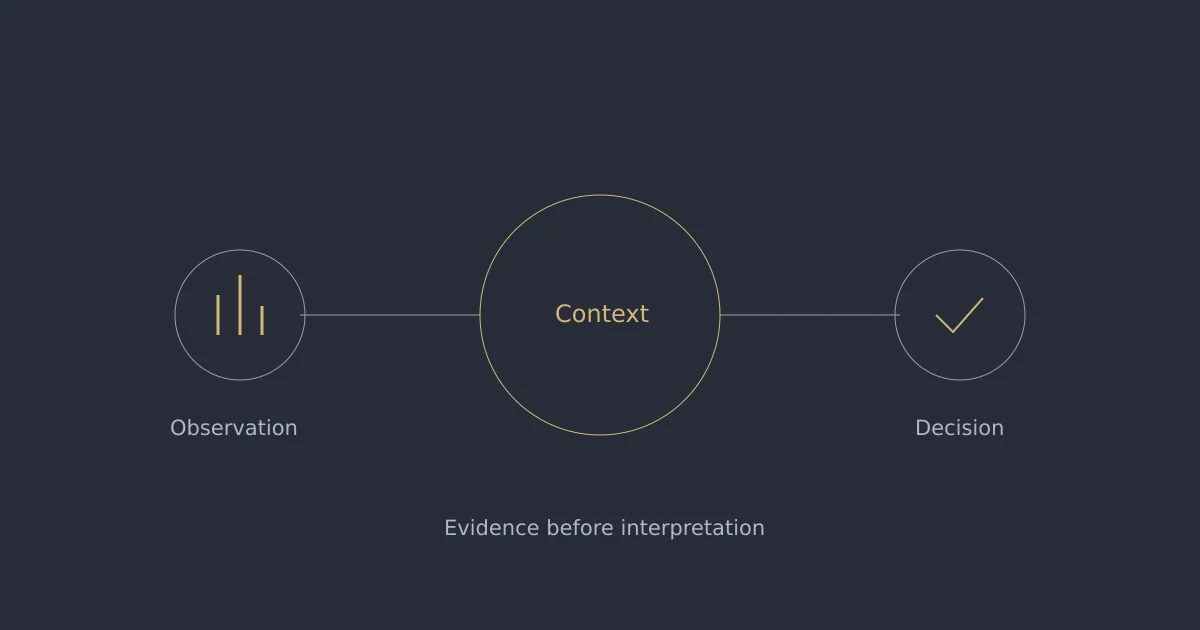
Read articleGrowth Intelligence connects measurement with decisions. It asks what a signal represents, how dependable it is and which action could improve the experience or outcome being measured.
Traffic, engagement and enquiries describe different parts of a journey. Looking at them together can reveal useful opportunities while avoiding decisions based on a single impressive-looking number.
Decide whether the objective is useful readership, a qualified conversation, a repeat visit or another observable result. Record the definition before reporting.
Review collection methods, missing data, attribution rules and reporting periods. Separate first-party observations from estimates and third-party samples.
Compare sensible segments and propose a specific improvement. Monitor the change with appropriate context rather than attributing every fluctuation to one cause.
Analytics is incomplete. Consent choices, blocked scripts, platform reporting rules and cross-device journeys introduce gaps. Correlation is not causation; attribution models allocate credit rather than prove why someone acted.
Start with the publication’s purpose. Useful readership and returning audiences may matter alongside qualified enquiries. A metric is only useful when its definition supports a real decision.
Often they cannot. People move between devices, platforms and conversations. Report the observable evidence and make attribution gaps explicit.
A dashboard presents observations. Growth Intelligence connects those observations to a defined decision, checks data limitations and proposes an action that can be evaluated.
Consider search performance, audience engagement, returning readership and relevant enquiries where available. State the reporting period, collection method and important gaps for each signal.
A traffic increase alone does not prove causation. Review timing, collection changes, seasonality and other plausible influences before concluding that one intervention produced the result.
A practical perspective on interpreting search visibility, audience behaviour and enquiries without confusing attribution with proof.
Read articleSearch intelligence uses search-related evidence to understand audience questions, discoverability and opportunities for useful content or technical improvement.
Read definitionHave a relevant idea or collaboration in mind? Tell us what you’re working on and the connection you see.