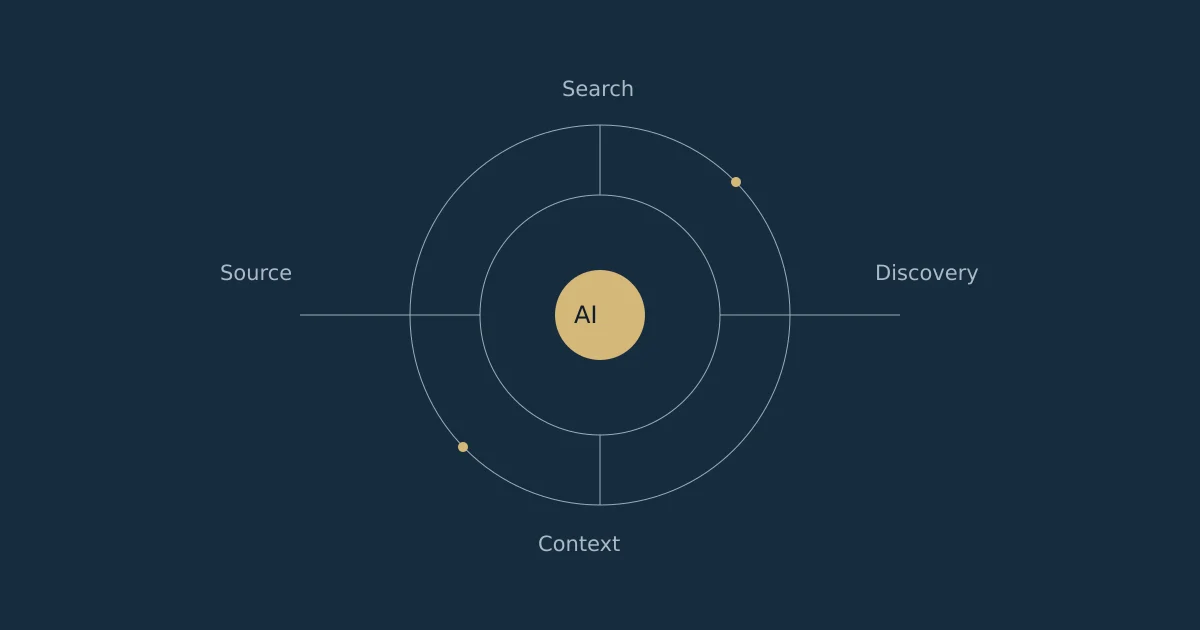
Measure Discovery, Not Just Traffic
A practical perspective on interpreting search visibility, audience behaviour and enquiries without confusing attribution with proof.
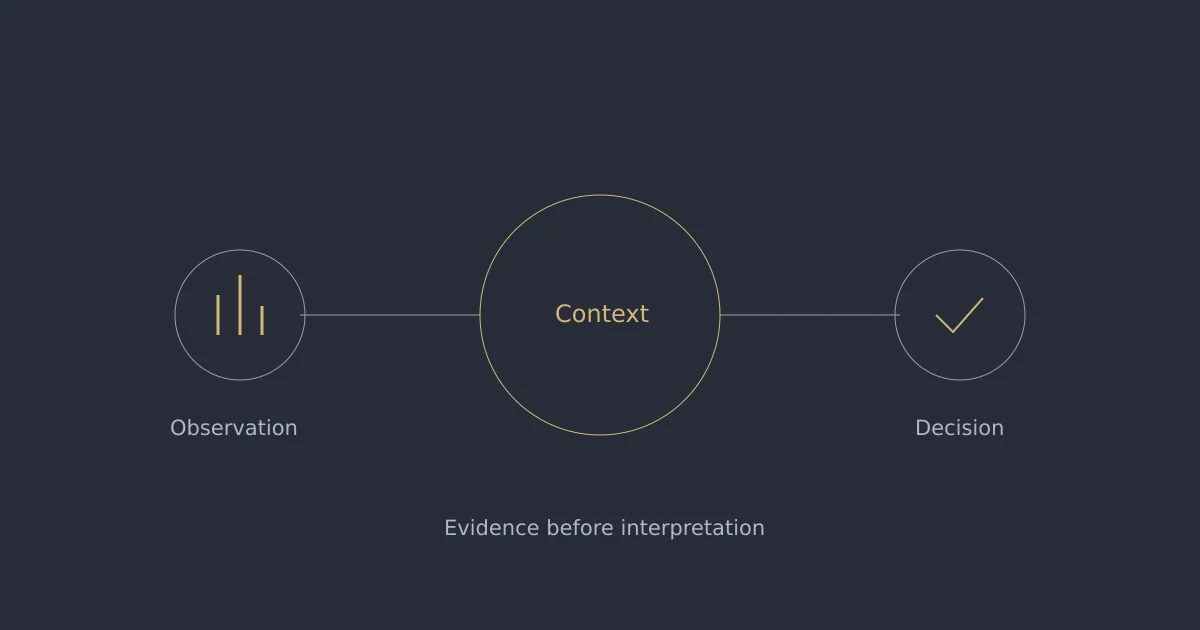
Traffic measures visits. It does not, by itself, explain whether an audience found a useful answer, developed confidence or made a relevant business connection. A useful measurement approach connects discovery signals to a clearly defined purpose.
This article offers an editorial framework for interpreting evidence. It is not a report of AISA client results or original research.
Define the decision before the dashboard
Start by asking what action the report should inform. A publisher deciding which guide needs revision has a different question from a business assessing the quality of incoming enquiries.
Write down the outcome and its definition. A “qualified enquiry,” for example, might require a relevant organisation, a stated need and permission to continue a conversation. That is an illustrative definition; each organisation should agree its own criteria before using the label.
Without a definition, a rising number can produce confidence without understanding.
Separate signals along the journey
Search impressions indicate that a page appeared under a platform’s reporting rules. Clicks describe a narrower action. On-site behaviour records only what the measurement setup can observe. Enquiries introduce another set of questions about relevance and intent.
Google’s introduction to Search Console describes tools for understanding and monitoring a site’s presence in Google Search. Those reports are useful within their stated scope; they are not a complete account of every audience interaction.
Treat the signals as related observations rather than interchangeable measures of success. A person may read a guide now and return through an unmeasured route later.
Record uncertainty where it enters
Blocked scripts, consent settings, device changes and conversations outside the website can leave gaps. Third-party visibility tools add their own sampling and modelling choices.
An attribution model allocates credit using chosen rules. It does not prove that a channel caused an enquiry. If several plausible explanations remain, say so.
A practical report can include the period, definition, source, known exclusions and proposed action beside the result. That context is often more useful than another decimal place.
Turn an observation into a focused improvement
Suppose a guide receives relevant search visits but readers struggle to find a related explanation. A useful next step could be to improve the heading and contextual link, then review behaviour over an appropriate period. This is a hypothetical example, not an observed AISA outcome.
The point is to connect evidence to an inspectable change. Avoid attributing every subsequent movement to that change when seasonality, platform updates or other activity could also matter.
Growth Intelligence begins with this habit: define the question, check the evidence and make the next decision with its limitations in view.