What Is an Owned Media Ecosystem?
Learn how a connected library of guides, insights and definitions can support an audience—and what a sustainable publishing system needs.
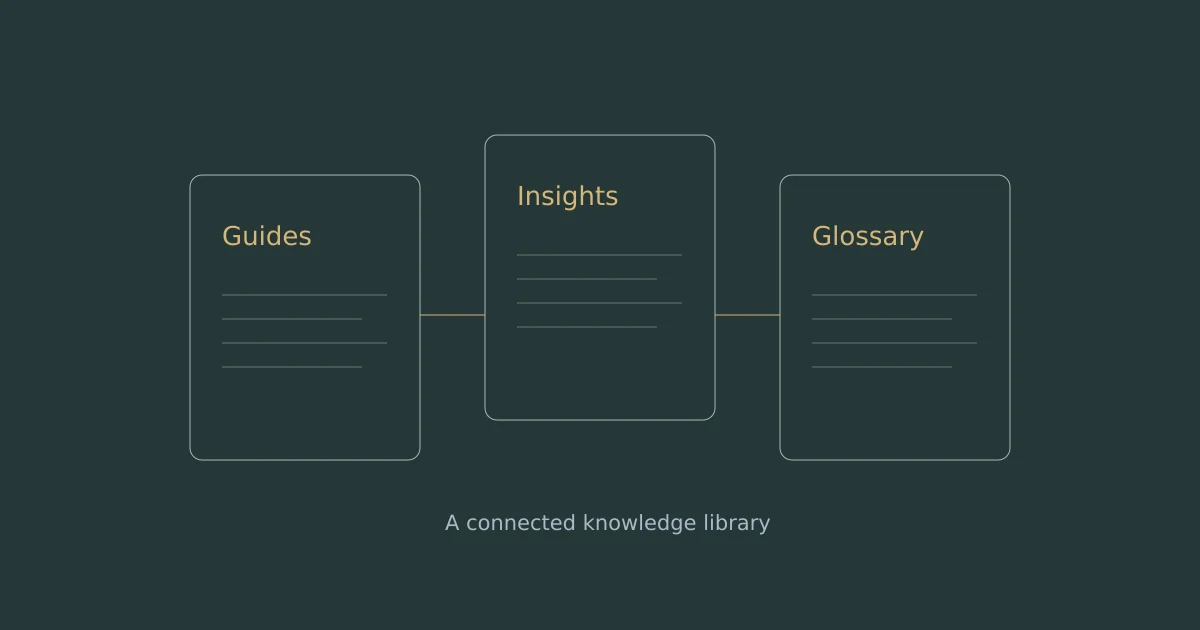
An owned media ecosystem is a connected set of publishing assets and audience experiences that an organisation can maintain directly. It can include a website, guides, a glossary, an editorial archive and permission-based communications. The defining feature is a coherent relationship between these parts and the audience they serve.
“Owned” does not mean independent of every platform. Hosting, domains, search engines and communication providers still introduce dependencies. It means the organisation has direct responsibility for the content and its ongoing operation.
Begin with a useful editorial purpose
A collection of pages becomes an ecosystem when the relationships help someone make progress. That requires a defined audience and a reason for the publication to exist.
A technology publication, for example, might help business owners understand the choices involved in deploying an assistant. A glossary introduces unfamiliar terms, a guide explains a decision and an insight piece considers a developing issue. Each type has a different job.
This example is a suggested structure, not a description of a measured commercial outcome. Publishing alone does not guarantee an audience or business opportunity.
Give each content type a clear role
An evergreen guide should answer an enduring question with enough context to support a decision. It needs periodic review even when the topic is stable.
An insight can explain a perspective, a development or an interpretation. Its publication date and the distinction between fact and opinion matter.
A glossary definition should make a concept understandable and connect it to a deeper explanation. It should not be an empty page written only to target a phrase.
Corporate capability pages explain the organisation’s areas of work. Linking them from educational content is useful when the relationship is relevant, but every article does not need a sales pitch.
Build relationships between pages
Organise around the audience’s questions before creating a large taxonomy. A small cluster might begin with one substantial guide, two definitions and a piece of analysis. Add another page only when it serves a distinct need.
Internal links should explain a useful relationship. A guide about AI assistants might link to human handoff when discussing escalation. A definition of structured data might point to a broader guide comparing discovery approaches.
Avoid publishing several near-identical articles simply because the wording of a keyword changes. If two proposed pages answer the same question for the same audience, improving one strong page may be more useful.
Establish a sustainable workflow
A practical workflow can remain simple:
- Record the reader’s question and the page’s purpose.
- Gather primary references and identify factual uncertainties.
- Draft an answer with examples and limitations.
- Review factual accuracy, clarity and internal links.
- Publish with a real date and editorial attribution.
- Revisit the page when sources, needs or terminology change.
Responsibility matters more than the number of tools. An elaborate platform cannot replace someone deciding whether an explanation is accurate, useful and ready for publication.
Google’s helpful-content guidance encourages a people-first focus rather than content made primarily to attract search visits. Applied to an editorial system, that suggests assessing what the page helps the reader do before considering how many queries it might target.
Understand the business connection
A useful publication can introduce relevant businesses or technology providers where that helps an audience. The editorial value should remain understandable on its own.
Any paid placement, referral arrangement or other commercial relationship needs appropriate disclosure and an agreed scope. A reference to another organisation does not automatically establish a partnership. Neither an educational page nor a contact link should imply a relationship that has not been confirmed.
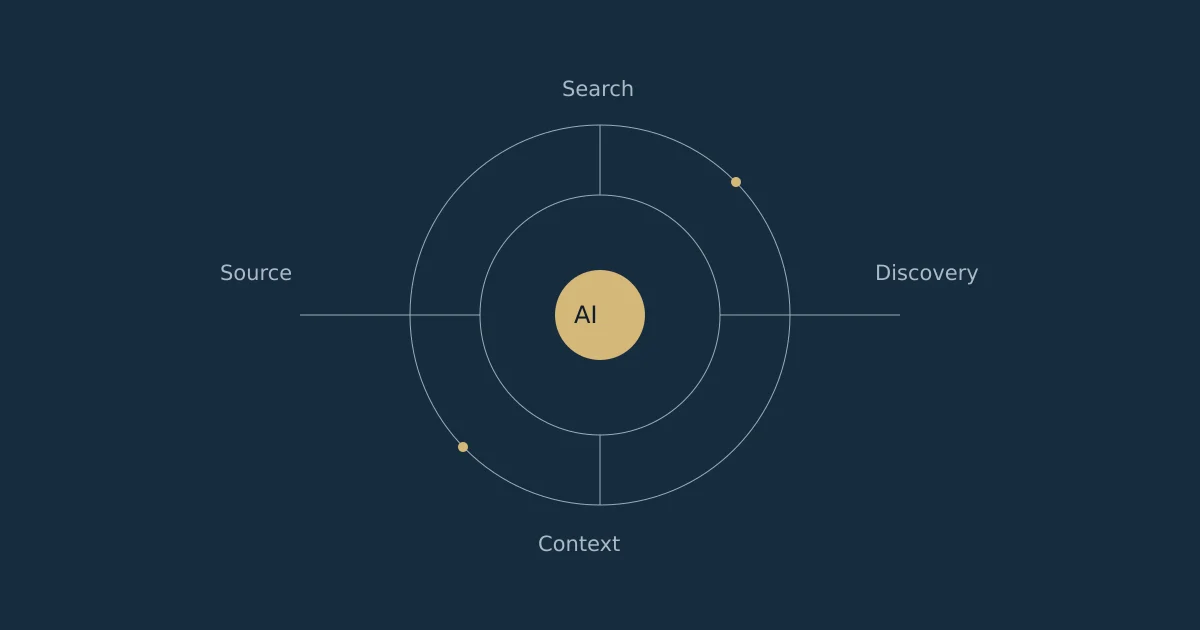
At AISA, the ecosystem approach connects publishing with search and AI visibility, intelligent engagement and measurement. This explains how the capabilities relate; it is not a claim that every application is available as a public product.
Measure usefulness, not just output
Article count is an operating measure, not proof of value. Consider whether people find the right pages, continue to related explanations, return to the publication or make relevant enquiries. Interpret those signals within the limits of the available data.
Review the content itself alongside analytics. A frequently visited article may still contain a confusing explanation. A low-traffic specialist guide may answer an important question for a smaller audience. Neither situation can be judged from a page-view total alone.
Start small and maintain the foundation
A coherent initial library is easier to review than a large backlog published at once. Choose a few substantial questions, connect them carefully and establish the habit of maintaining what is already live.
An owned media ecosystem is a continuing editorial commitment. Its strongest foundation is a clear purpose, reliable information and an experience that helps a reader decide what to understand next.